
Introduction
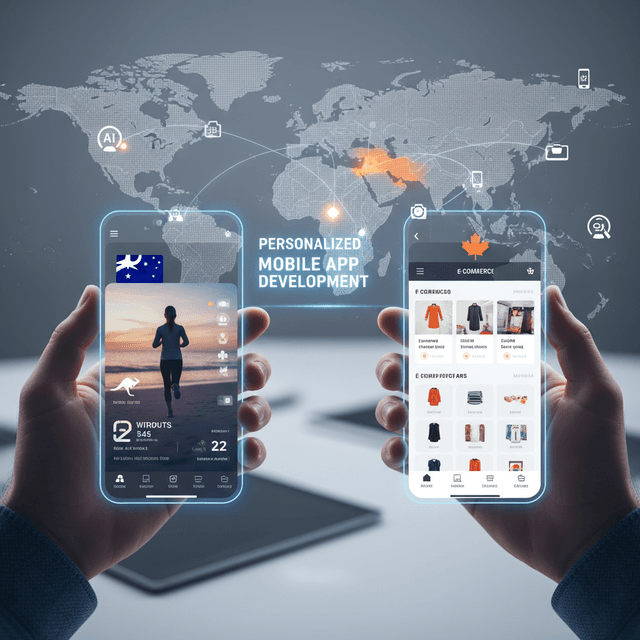
In an era dominated by smartphones, personalized mobile app development is reshaping the digital experience. This innovative approach prioritizes tailoring app functionality to match individual user preferences and behaviors. Across Australia and Canada, businesses are embracing mobile-first strategies to cater to their diverse demographics by delivering user-centric solutions with dynamic app features. As user-centric apps gain momentum, companies are leveraging trends such as Australia mobile trends and Canada’s focus on mobile-first strategies to stay ahead of the curve.
Background: What is Personalized Mobile App Development?
Personalized mobile app development revolves around creating applications uniquely designed to meet users’ specific needs. By implementing mobile-first strategies, businesses deliver responsive, intuitive apps with dynamic features. The industry has evolved from generic app designs to more customized user-centric apps—an adaptation perfectly aligned with Australia mobile trends that prioritize convenience and personalization. Similarly, Canada’s tech-savvy market thrives on apps that are finely tuned to individual user preferences, reinforcing the importance of this innovative approach.
Current Trend: User-Centric Apps in Australia and Canada
The prevalence of user-centric apps signifies a remarkable consumer shift in Australia and Canada. In Australia, localized content and solutions drive innovation, reflecting major Australia mobile trends that are enhancing personalized experiences. Meanwhile, Canada is advancing mobile-first strategies anchored on robust technology and infrastructure. Notable comparisons include Australian apps that utilize dynamic app functionality to drive user engagement, contrasted with Canadian platforms employing AI tools for personalization. This shared emphasis underscores the increasing relevance of personalized mobile app development in a global context.
Insight: Why Dynamic App Functionality is the Key to Success
Dynamic app functionality is essential to the success of user-centric apps, as it enables applications to adapt to shifting user behaviors. In Australia, apps that incorporate interface adjustments based on consumer behavior lead Australia mobile trends. Similarly, Canada’s focus on mobile-first strategies highlights real-time adaptability as a hallmark of effective personalization. For example, a fitness app might customize activity plans depending on a user’s location or fitness goals. These efforts exemplify personalized mobile app development while delivering actionable results that resonate with users.
Forecast: What’s Next for Mobile Trends in Australia and Canada?
The evolution of user-centric apps is poised to reach new heights, fueled by advances in artificial intelligence and machine learning. Future innovations in personalized mobile app development may include stronger adoption of predictive analytics and innovative feature sets. Australian apps could merge social networking with real-time adaptive technologies, further propelling Australia mobile trends. In contrast, Canada’s embrace of mobile-first strategies might leverage AI to deliver expansive dynamic features. As the landscape continues transforming, businesses must stay alert to evolving technologies to retain their competitive edge.
Call to Action: Build Your User-Centric App Today
To stay ahead in the rapidly changing mobile app ecosystem, businesses must embrace personalized mobile app development. By adopting mobile-first strategies and harnessing dynamic app functionality, enterprises can deliver experiences that enhance user satisfaction and long-term engagement. Whether targeting Australia mobile trends or meeting Canadian demands, user-centricity is the ultimate game-changer. Need expert guidance? Visit our mossmize blog for actionable insights into crafting user-driven solutions and making your app a leader in today’s tech landscape.
