
Introduction
In today's digital age, mobile applications underpin technological progress across numerous industries in the USA, including education, healthcare, e-commerce, and entertainment. Despite their widespread adoption, there is one vital aspect that often remains overlooked: mobile app accessibility. But what does app accessibility truly entail? An accessible app accommodates users of varying abilities and disabilities, ensuring equitable usability for all.
Accessibility in apps does more than fulfill ethical responsibilities—it enhances user experience and extends market reach by embracing broader demographics. Such inclusivity fosters innovation while underscoring societal values. This blog delves deeper into the often-overlooked aspects of mobile app accessibility, examining challenges faced by developers, emerging trends, and the powerful role accessible apps play in shaping an inclusive digital environment within the USA.
The Importance of Accessibility in Mobile Apps
Why Does Accessibility Matter? Accessibility is not merely optional; it is integral to inclusive app design. According to the CDC, approximately one in four adults in the USA live with a disability, highlighting why accessible mobile apps are crucial for this significant portion of the population. Inclusive design benefits all users, including those with impairments, neurodivergent individuals, older adults, and the general population. Features like voice commands and larger text sizes enhance usability, making apps functional for everyone. Designing with a focus on accessibility mirrors societal movements towards equality and inclusion.
Legal and Social Factors Beyond societal advantages, accessibility is also governed by legal standards such as the Americans with Disabilities Act (ADA). Noncompliance risks legal penalties and reputational damage, as significant cases against prominent brands demonstrate. Building accessible apps not only fulfills legal obligations but also strengthens community ties and showcases a commitment to social responsibility. To learn more about ADA compliance and accessible app development, check out Mobile App Development USA: Accessible Trends.
Current Trends in Mobile App Accessibility in the USA
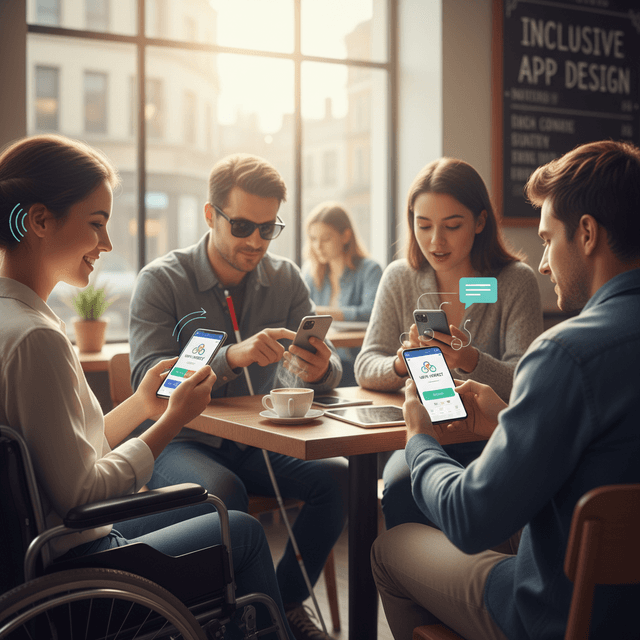
Inclusive App Design in Action The landscape of mobile app accessibility in the USA is undergoing rapid innovation. Cutting-edge features such as voice recognition, text-to-speech, and haptic feedback are revolutionizing how apps serve users with unique needs. Tech giants like Apple and Google lead the way, offering tools such as VoiceOver and TalkBack to assist visually impaired individuals. A standout example is Starbucks' app, which integrates screen-reader-friendly navigation to enhance user accessibility.
User Experience Improvements Enhanced accessibility often translates to better user experience. Apps that emphasize inclusive features outperform others by fostering higher user engagement and satisfaction. Meeting the diverse requirements of users boosts retention while driving growth. Industries like retail, education, and entertainment are increasingly seeing accessibility as not only a necessity but also a driver of long-term success.
Insights Into the Challenges of Mobile App Accessibility
Common Barriers Developers Face Developing accessible mobile apps in the USA is a challenging endeavor. Technical difficulties in integrating accessibility features often obstruct progress. Additionally, startups and smaller-scale developers face constraints due to limited budgets and time.
Solutions and Best Practices Overcoming these obstacles calls for strategic efforts. Developers must adhere to Web Content Accessibility Guidelines (WCAG), perform regular usability testing, and solicit feedback from users with disabilities. Collaboration with accessibility consultants enables more refined and inclusive solutions. Companies like Mossmize seamlessly incorporate these practices to achieve compliance and foster innovation in app development.
The Future of Mobile App Accessibility in the USA
Emerging Innovations The future of accessible mobile apps is brimming with potential. Artificial intelligence (AI)-driven technologies like predictive text, adaptive interfaces, and personalized assistive tools hold immense promise for addressing diverse user needs. Emerging advancements, such as neural hash technology, could redefine accessibility standards, making universal app design achievable on a broader scale.
Increasing Demand for Inclusive Experiences Companies prioritizing mobile app accessibility stand to gain not only in terms of market leadership but also in leveraging inclusivity for social equity. Stricter regulations and growing societal emphasis on inclusivity place early adopters in a competitive position. Embedding accessibility within brand identity elevates reputation, creating a powerful differentiation in a crowded marketplace while addressing essential societal concerns.
Call to Action
Accessible mobile app design is more than resolving technical hurdles—it’s a chance to drive meaningful social progress and unlock substantial growth opportunities. Businesses and developers must perceive accessibility as a priority to serve diverse audiences better.
If you’re seeking solutions for inclusive app design, consider partnering with Mossmize, an industry-leading software development agency. Implementing best practices for accessibility not only ensures compliance but also enhances organizational reputation and fosters user loyalty in the long term.
